
A First-Time Visitor’s Guide to St Davids, Pembrokeshire
If you’ve never visited St Davids before, you might be wondering what to expect.
Is it really a city? How long should you stay? What is there to do? Can you walk to the coast? Where should you eat? And, perhaps most importantly, how do you fit everything in?
The short answer is: St Davids is much more than somewhere to stop for a few hours.
It may be Britain’s smallest city, but it packs an extraordinary amount into a very small area — from its magnificent cathedral and ancient Bishop’s Palace to beautiful beaches, dramatic cliffs, the Pembrokeshire Coast Path, wildlife and some lovely independent places to eat and shop.
We’ve lived here for many years, and one of the things we love most is that you can have a completely different experience depending on how you spend your time.
So, if this is your first visit, here’s our guide to getting the most from St Davids.
First things first: yes, St Davids really is a city!
St Davids is officially a city — despite feeling much more like a peaceful little village.
Its city status comes from its extraordinary religious history. St David, the patron saint of Wales, founded a religious community here around the sixth century, and the site became an important place of pilgrimage.
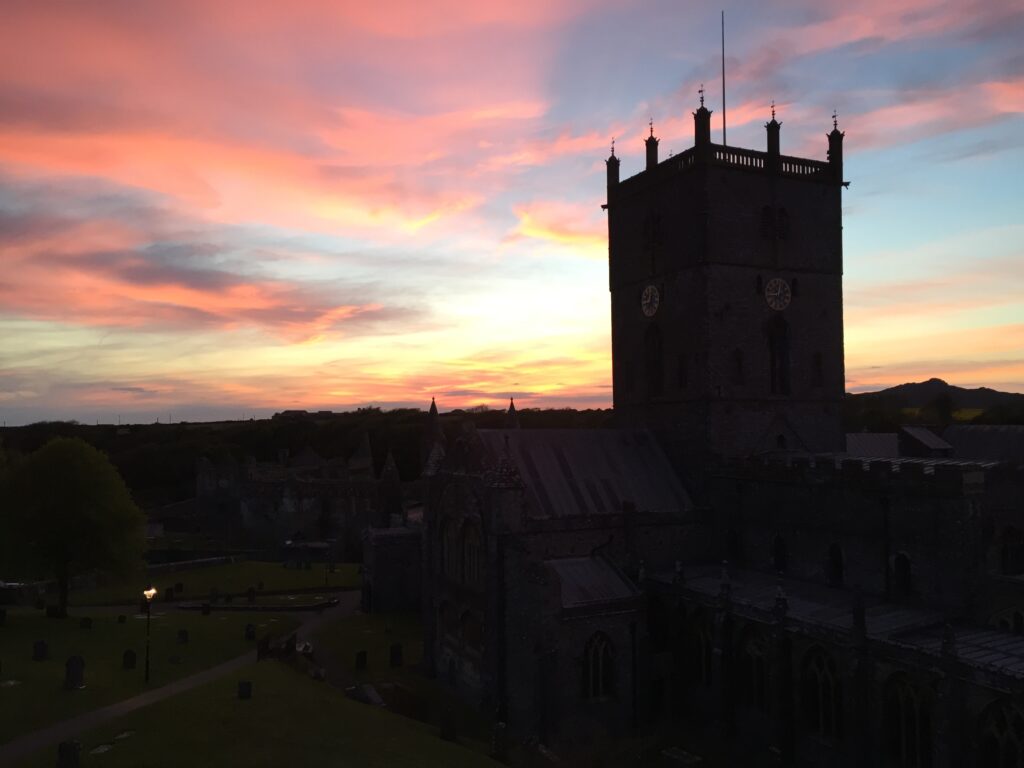
Today’s magnificent St Davids Cathedral stands in the sheltered valley below the city alongside the ruins of the medieval Bishop’s Palace.

It is one of those places that photographs don’t quite prepare you for. You wander down through the narrow streets and suddenly the Cathedral appears below you.
It’s a lovely introduction to St Davids.
How long should you spend in St Davids?
We’d recommend at least two nights for a first visit.
You can certainly see the highlights in a day, but staying overnight gives you something a day trip cannot: time to slow down.
With two nights, you can explore the Cathedral and city, enjoy one of the local beaches or a coastal walk, have a leisurely meal and still have time simply to wander.
If you have three or four nights, even better.
That gives you time for a boat trip, a longer section of the Coast Path, a visit to nearby Solva or a more relaxed day exploring the beaches and coves around the peninsula.
And if you are coming from a distance, we’d always encourage you not to try to squeeze St Davids into a rushed itinerary.
The best bits are often the moments when you aren’t rushing anywhere.
Start with St Davids Cathedral
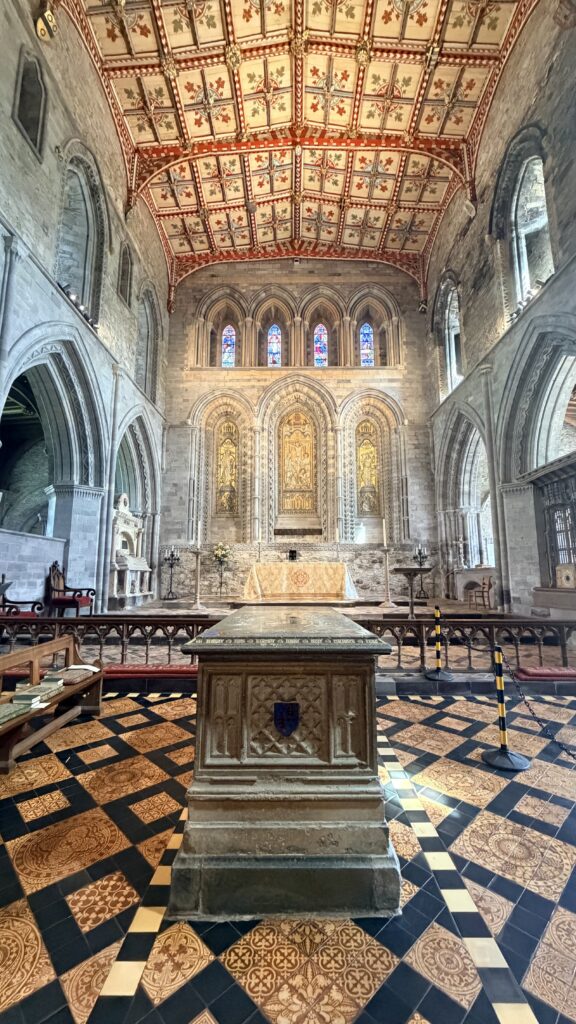
For a first visit, we’d put the Cathedral near the top of your list.
The Cathedral dates largely from the 12th century and occupies the site of an earlier religious settlement associated with St David.
It is open for general visiting, and there is no compulsory admission charge, although donations are welcomed. Current visiting information and opening times are available from the Cathedral itself.
The Cathedral sits in an extraordinary setting in the valley, beside the River Alun.
Take your time inside, but also make sure you explore the surrounding Close.
Don’t miss the Bishop’s Palace
Immediately beside the Cathedral are the impressive ruins of St Davids Bishop’s Palace, now cared for by Cadw.

The ruined medieval buildings give you a fascinating glimpse into the wealth and importance of St Davids during the medieval period.
Allow time to wander around rather than simply looking from the entrance.
Together, the Cathedral and Bishop’s Palace make one of the most atmospheric parts of the city.
Then head for the coast
One of the great advantages of staying in St Davids is how quickly you can get from the city to the coast.
You don’t have to get in the car to experience the sea.
From the city, you can walk towards St Non’s, the traditional birthplace of St David, and continue along the Coast Path.
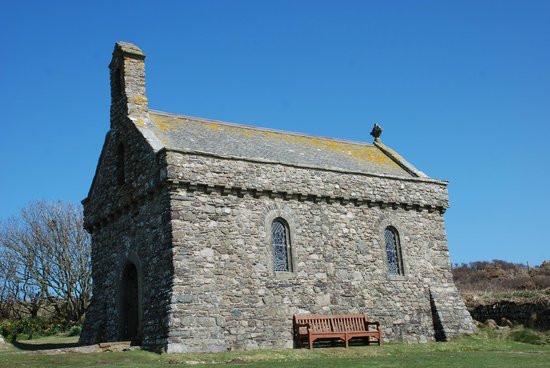
The views here are spectacular.
For a relatively easy outing, you could make St Non’s your destination and return to the city.
For something longer, continue towards Porthclais or explore further along the peninsula.

If you’d like some inspiration, we’ve also put together our guide to the best short walks from St Davids.
Discover the beaches
St Davids is surrounded by some wonderful beaches and coastal coves.
Whitesands Bay

The classic choice.
A beautiful sweep of sand backed by dramatic hills and one of the best-known beaches in the area.
Caerfai Bay

Closer to St Davids and quite different in character, with colourful cliffs and a lovely little beach at low tide.
Porthmelgan
A smaller, more secluded cove reached on foot, making it ideal for combining with a coastal walk.
Abereiddy and the Blue Lagoon
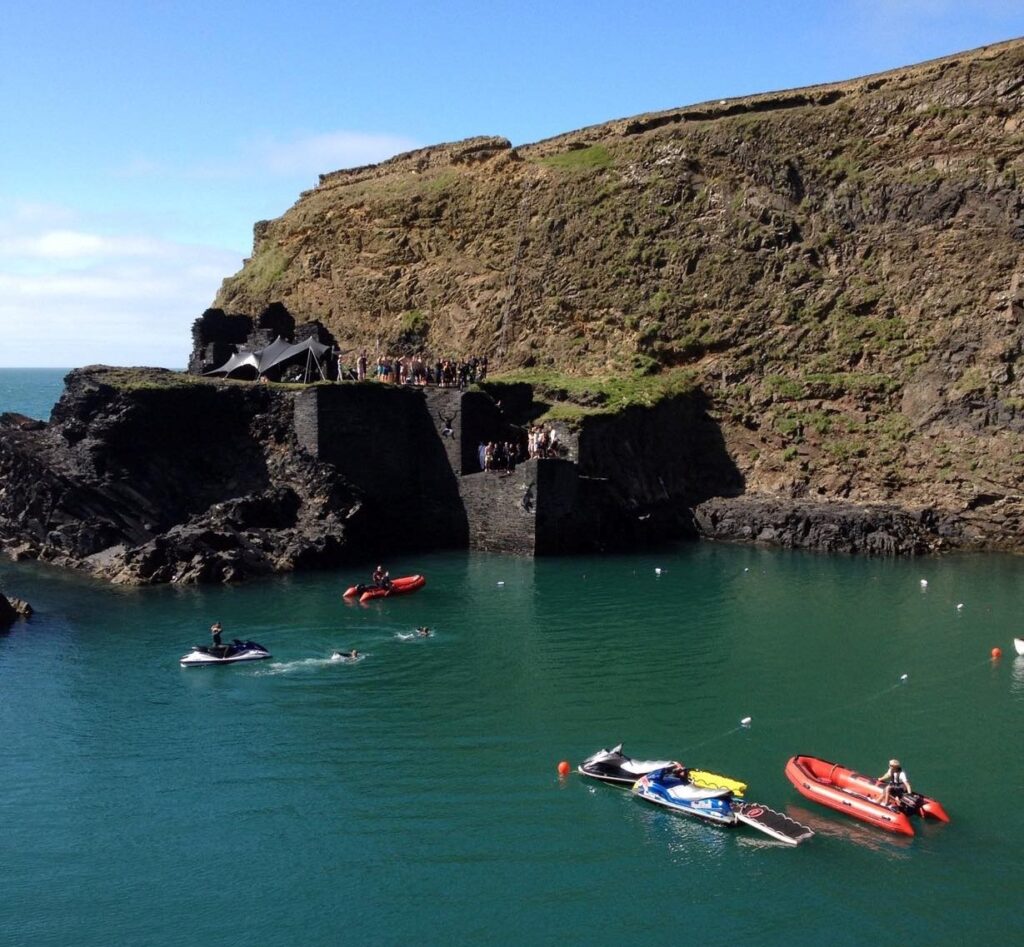
A little further away but well worth the trip for the dramatic former slate quarry and its famous deep blue water.
We’ve written a separate guide to the best beaches near St Davids, so have a look before deciding which ones you’d like to visit.
Take a boat trip

If the weather and sea conditions allow, getting out onto the water is one of the best ways to experience this part of Pembrokeshire.
Ramsey Island lies just offshore and is famous for its wildlife and dramatic coastline.
Depending on the trip and time of year, you may have opportunities to see seals, seabirds and other marine wildlife.
There are also boat trips around the wider Pembrokeshire coast and offshore islands.
It’s a completely different perspective on the landscape you see from the Coast Path.
Don’t overlook St Davids itself
It’s tempting to spend your whole visit exploring the coastline, but allow some time simply to wander around the city.

St Davids has independent shops, galleries, cafés and places to eat, and the compact centre is easy to explore on foot.
The city’s small size is part of its charm.
You don’t need to tick off twenty attractions.
Take a wander. Stop for coffee. Browse the shops. Find somewhere for lunch. Sit in the Cathedral Close.
That’s part of experiencing St Davids.
Where should you eat?
St Davids has a surprisingly good selection of places to eat for such a small city.
You’ll find everything from cafés and relaxed lunches to seafood and more formal evening dining.

Our advice is to book dinner ahead during busy periods, particularly in the summer and around bank holidays.
We’ve put together a separate guide to where to eat in St Davids, including some of our favourite cafés and places for a meal.
That means you don’t have to spend your holiday researching where to eat — we’ve done some of the work for you!
What about parking?
If you’re visiting by car, it’s worth thinking about parking before you arrive.
There are seasonal pay-and-display car parks in St Davids, including Oriel y Parc, Quickwell Hill and Merrivale.

Parking arrangements and charges can change, so it’s always worth checking the latest information before travelling.
If you’re staying in St Davids, however, one of the great advantages is that you can leave the car behind for much of your visit.
That’s one of the reasons we love the location of Ramsey House.
You can explore so much of the area without having to get back into the car every time you want to go somewhere.
What should you pack?
For St Davids, we’d always suggest packing for the coast rather than the calendar.
Even on a beautiful summer day, conditions can change quickly on the Pembrokeshire coast.
Bring:
- Comfortable walking shoes
- A waterproof jacket
- Layers
- Sun cream
- A hat
- Water
- A small backpack
- Binoculars if you have them
And don’t forget your camera.
Although we’re slightly biased, we think you’ll want it!
When is the best time to visit St Davids?
There isn’t really one answer.
Spring brings longer days, fresh green landscapes and the return of many coastal birds.
Summer is wonderful for beaches, boat trips and long evenings — although it is naturally the busiest time.
Autumn can be magical. The crowds thin out, the light can be beautiful and the coastline feels wonderfully wild.
Winter is a completely different experience. If you enjoy dramatic weather, coastal walks and peaceful days, St Davids can be extraordinary out of season.
One of our favourite things about living here is that the landscape never quite looks the same twice.
A simple first-time itinerary
If you have two full days, we’d suggest something like this:
Day One
Morning: Explore St Davids Cathedral and Bishop’s Palace.
Lunch: Find a café or restaurant in the city.
Afternoon: Walk towards St Non’s and enjoy the coastline.
Evening: Dinner in St Davids, followed by a gentle wander through the city.
Day Two
Morning: Visit Whitesands or Caerfai.
Afternoon: Explore more of the Coast Path — or take a boat trip if conditions allow.
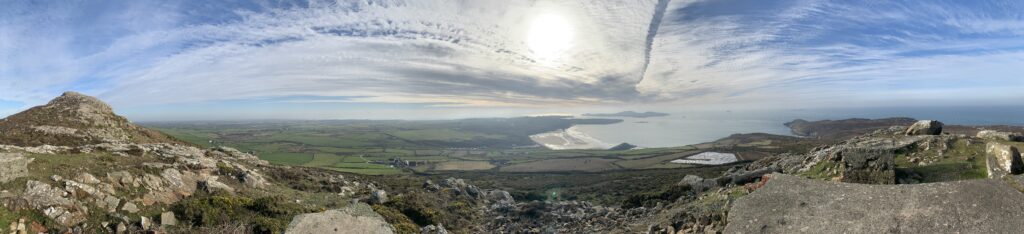
Evening: Enjoy another relaxed meal and make the most of being somewhere where you don’t need to rush.
And if you have a third day?
That’s when we’d start exploring further afield.
Don’t try to do everything
This might be our most important piece of advice.
You don’t need to see every beach.
You don’t need to walk every mile of the Coast Path.
You don’t need to visit every attraction.
St Davids is at its best when you give yourself permission to slow down.
Have a coffee.
Walk by the river.
Sit in the Cathedral.
Watch the waves.
Find a quiet bench.
And then do it all again tomorrow.
Staying in St Davids
For a first visit, we think staying in the city itself makes a huge difference.
Rather than driving in, seeing the Cathedral and a beach, and driving away again, you get to experience St Davids when the day visitors have gone home.
The streets become quieter, the evenings feel peaceful and the coastline is right there waiting for you in the morning.
That’s one of the reasons we’re so fond of our home here at Ramsey House Boutique B&B.

We’re within easy reach of the Cathedral, the city centre and the coast, making it easy to leave the car behind and explore on foot.
After a day discovering St Davids, you can come back, relax and enjoy a good night’s sleep before another Pembrokeshire adventure.
And, of course, breakfast is waiting for you in the morning.

Ready to discover St Davids?
If this is your first visit, we hope you’ll fall in love with St Davids as much as we have.
It’s a small city with a remarkable history, extraordinary coastline and a wonderfully relaxed pace of life.
Come for the Cathedral. Stay for the coast. And give yourself time to discover everything in between.